Key takeaways
- Get pre-approved first, then search a little below your maximum. On a 25-year mortgage at 4.5%, every $40,000 less borrowed is about $221 a month less.
- Write two lists, needs and wants, and rank the wants. Agree on them with anyone you're buying with before the first viewing.
- Choose two or three neighbourhoods before you choose a house: visit at rush hour, on a weeknight and on a weekend.
- At every viewing, check for water, the age of the roof and mechanicals, and the cost to run the home, not just the decor.
- Compare homes on the total monthly cost: mortgage, property tax, heating, insurance and condo fees.
To find the right home, set a price range you can comfortably carry, write down your needs and wants, choose your neighbourhoods first, and then view homes with a checklist instead of your gut alone. House hunting is part research, part gut feel. The research makes sure your gut is choosing among homes that will actually work for you.
This guide covers the search itself. For the full process from budget to keys, see steps to buying a home.
1. Set a price range you can carry
Get pre-approved and work out what you can comfortably afford before you look at a single listing. Then search a little below your maximum. That leaves room for competition, closing costs and the surprises every home has.
The lender's number isn't your budget. CMHC's guideline for insured mortgages is that housing costs (principal, interest, property tax, heating and half of any condo fee) shouldn't exceed 39% of gross household income, and all debts 44%. Many households are more comfortable well below those ceilings.
2. Separate needs from wants
Make two lists, with anyone you're buying with:
| Needs (deal-breakers) | Wants (nice to have) |
|---|---|
| Number of bedrooms | Ensuite bathroom |
| Commute time | Finished basement |
| Parking | Gas stove |
| School catchment | Fireplace |
| Accessibility (stairs, entrance) | Home office |
| Pets allowed (condos) | Garden or yard |
Rank the wants. You probably won't get all of them, and knowing what matters most makes decisions faster. Then add a third column most buyers forget: what you won't accept. A home backing onto a highway, a north-facing yard, a condo with a pet ban. Writing these down stops you rationalising them away at a viewing.
3. Choose the neighbourhood before the house
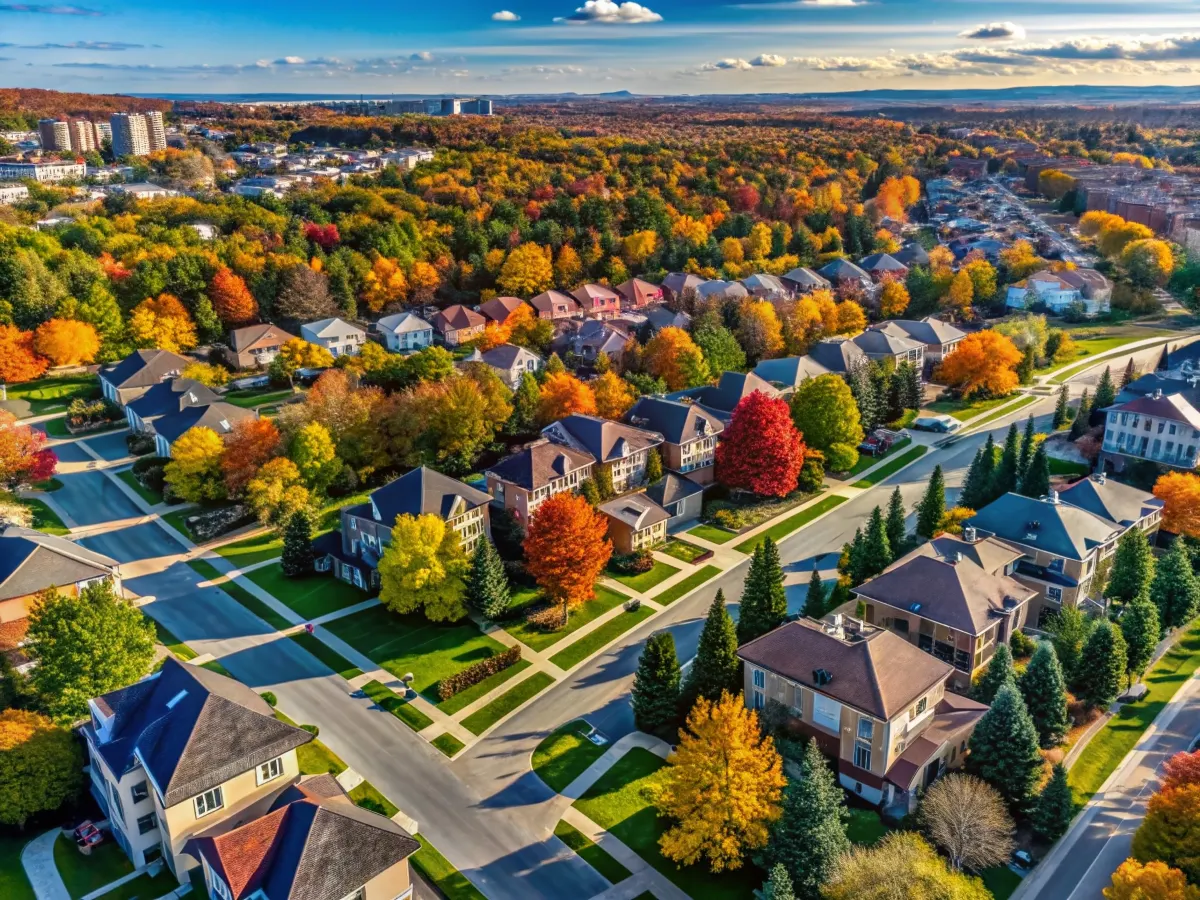
You can renovate a kitchen. You can't move a house. Compare areas on what matters to you: commute and transit, schools, parks, shops, noise and the feel of the street. Visit at different times: weekday rush hour, a weeknight and a Saturday afternoon. See how to find your perfect neighbourhood and our neighbourhood guides.
Prices differ by city and by area within a city. Use live figures to check whether your budget fits the places you're considering. See the current figures below.
If your budget doesn't stretch to your first-choice area, consider the next neighbourhood over, a different home type (a townhouse instead of a detached house), or a home that needs cosmetic work. City vs suburbs compares the trade-offs.
4. Set up your search
- Set alerts for your areas, price range and must-haves so you see new listings fast. Start browsing on homes for sale or the Ottawa listings page.
- Keep filters slightly loose. A home listed just above your range may sell within it; a "two-bedroom plus den" may suit a three-bedroom need.
- Read listings closely. Note the property tax, condo fee, what's included, rental equipment (water heaters are often rented) and how long it's been listed.
- Choose an agent who knows your areas and can tell you what similar homes sold for. See how to choose a real estate agent.
- Use open houses to calibrate quickly. Our open house guide has a plan for a 20-minute visit.
5. View homes with a critical eye
Bring a checklist and look past the staging. A fresh coat of paint and good lighting can hide a lot.
| Area | What to check |
|---|---|
| Water | Stains on ceilings, musty basements, efflorescence (white residue) on foundation walls, fresh paint in odd places |
| Roof | Age, curling or missing shingles, staining in the attic hatch area |
| Windows and doors | Condensation between panes, drafts, doors that stick |
| Mechanicals | Furnace, air conditioner and water heater ages (look for the stickers), electrical panel type and capacity |
| Plumbing | Water pressure, slow drains, the material of visible pipes |
| Layout and light | Does it work for how you actually live? Where does the sun come in? |
| Storage | Closets, garage, basement, pantry |
| Outside | Grading that slopes away from the house, downspouts, condition of decks and fences |
| Noise and smell | Traffic, neighbours, pets, smoke |
Take photos (with permission) and notes. After five viewings, homes start to blur together. Score each home against your needs list the same day.
Extra checks for condos
Ask about the monthly fee and what it covers, any recent or planned special assessments, rules on pets, rentals and renovations, and parking or locker ownership. In Ontario, your lawyer should review the status certificate before you're committed: it sets out the reserve fund, budget and any legal actions. See the condo lifestyle guide.
6. Look at what's around it
Walk the block. Check what's planned nearby: new buildings, transit projects and road widening can change an area, for better or worse. Your municipality publishes development applications and zoning maps online, and many publish flood mapping. Look at the home's location on them before you make an offer.

7. Compare homes on total monthly cost
Two homes at the same price can cost very different amounts to live in. For each shortlisted home, add up:
- mortgage payment,
- property tax (it's on the listing or available from the municipality),
- heating and other utilities (ask the seller's agent for recent bills),
- home insurance (get a quote before you offer: some homes cost more to insure),
- condo fees, if any,
- a maintenance allowance, which is higher for older homes.
CMHC's list of homebuying costs also includes items buyers forget, such as appliances, window coverings and service hook-ups.
8. Red flags that deserve a second look
Not every flaw is a deal-breaker, but these warrant an inspector's opinion, a specialist, or walking away:
- signs of active water entry or recent foundation repairs with no paperwork,
- renovations that clearly needed permits but have none on file,
- a strong smell masked by air fresheners,
- a much lower price than comparable homes with no clear reason,
- a condo with a thin reserve fund or a large special assessment coming.
9. Keep the search on track
- Review your lists after the first few weekends of viewings. Your priorities may shift.
- Track what sells and for how much. Your agent can send sold prices for homes you viewed. It's the fastest way to learn real value.
- Don't fall for one home before an inspection. See the home inspections guide.
- Be ready to move. When the right home comes up, you may need to offer within days. How to make an offer covers what to prepare, and bidding wars covers competition.
Searching takes anywhere from a few weeks to a few months. How long does it take to buy a house? sets out the whole timeline.
This article is general information, not financial advice.
Frequently asked questions
How many houses should I see before buying?
There's no right number. What matters is that you've seen enough to know what your budget buys in your chosen areas, so you'd recognise a good one quickly. Many buyers find that after their first few weekends of viewings, their needs and wants list changes, which is a sign the search is working.
Should I look at homes above my budget?
It's usually a mistake. You'll compare every home you can afford with one you can't, and in a competitive market you may be tempted to stretch. If a home is listed slightly above your range, ask your agent what similar homes actually sold for before you book a viewing.
What should I not say during a showing?
Assume anything you say in a home, or to the listing agent, may reach the seller. Don't discuss your maximum budget, your timeline pressure or how much you love the place. Save that conversation for your own agent, outside.
Can I take photos and videos during a viewing?
Ask first: it's the seller's home, and some sellers don't allow it. If you can, photograph the electrical panel label, furnace and water heater stickers (which often show the age), and anything you want an inspector to look at.
Is it better to buy a condo or a house as a first home?
It depends on your budget, how much maintenance you want and where you want to live. A condo often costs less to buy in central areas but comes with monthly fees and shared decisions; a freehold gives you control and all the repairs. Read the condo's status certificate before you commit.
When is the best time of year to house hunt?
Spring usually brings the most listings and the most competition; winter brings fewer of both. The best time is when your finances are ready. See how long it takes to buy a house for what each season is like.
Sources
- Financial Consumer Agency of Canada — Buying a home
- Financial Consumer Agency of Canada — Getting preapproved for a mortgage
- CMHC — General requirements for homeowner mortgage loan insurance (debt ratios)
- CMHC — How much will my home really cost?
- Condominium Authority of Ontario — What is a status certificate?