Key takeaways
- The open house host works for the seller. In Ontario, they must tell you so, and anything you say can be passed on to the seller.
- Give each home a 20-minute plan: outside first, then every room, then the basement and mechanicals, then your questions.
- Ask about the offer date, price history, property tax, utility costs, updates with permits, and any pre-listing inspection.
- Two homes at the same price can differ by hundreds of dollars a month in tax, heating and fees. Compare running costs, not just asking prices.
- If a home makes your shortlist, book a private showing with your own agent before you think about an offer.
An open house lets you walk through a home for sale without booking a showing. To get the most from one, read the listing first, follow a set route through the home, check for water, age and running costs, ask the host a short list of questions, and remember the host works for the seller. With a plan, 20 minutes is plenty.
Open houses are also the fastest way to learn what your budget buys. Visit several in a weekend, then compare notes against the prices homes actually sell for.
Who you're talking to
The person hosting an open house is usually the listing agent or a colleague from the same brokerage. Either way, they're there for the seller.
In Ontario, RECO's open house rules say:
- the host must make it clear to visitors that they represent the seller (or, if the seller has a designated representative and the host isn't that person, that they don't represent the seller),
- hosts should avoid giving advice or opinions about the property to visitors they don't represent, and stick to facts,
- the seller's agent has a duty to share what you tell them with their client.
If you're not working with an agent and the brokerage helps you, it must first give you RECO's Information and Disclosure to Self-represented Party form, which explains the risks. Other provinces have their own disclosure rules; ask the host who they act for.
Before you go
- Read the listing. Note anything to check: the age of the roof, parking, basement height, rental equipment, the condo fee and what it covers.
- Look at the street view and map. Note busy roads, rail lines and what's behind the backyard.
- Map a route if you're seeing several homes. Allow 20 to 30 minutes per home plus travel.
- Bring your phone, a notepad or notes app, a tape measure if furniture fit matters, and a small flashlight for the basement.
- Bring your checklist of needs and wants. See house hunting tips for how to build one.
A 20-minute plan for each home
| Minutes | Where | Focus |
|---|---|---|
| 0–3 | Outside | Roof, grading, downspouts, driveway, the neighbours' homes |
| 3–12 | Main rooms and bedrooms | Layout, light, storage, windows, signs of water |
| 12–16 | Kitchen and bathrooms | Water pressure, cabinets, ventilation, caulking |
| 16–19 | Basement and mechanicals | Furnace, water heater, panel, foundation walls |
| 19–20 | The host | Your questions |
Go against the flow if the home is busy: start in the basement while everyone else is in the kitchen.
What to look at
Outside
- Does the ground slope away from the foundation? Do downspouts discharge well clear of the house?
- How does the roof look from the street: curling, missing or mismatched shingles?
- Are the deck, fences and walkway in good condition, or due for replacement?
Inside
- Light and layout: does the space flow? Where does the sun come in, and when?
- Signs of water: ceiling stains, musty smells, efflorescence on basement walls, fresh paint in odd places.
- Windows and doors: do they open and close smoothly? Any condensation between panes?
- Floors: soft spots, sloping or new flooring in only one room.
- Storage: closets, pantry, garage.
- Noise: stand quietly for a minute in the main bedroom. Traffic, neighbours, nearby businesses?
Kitchen and bathrooms
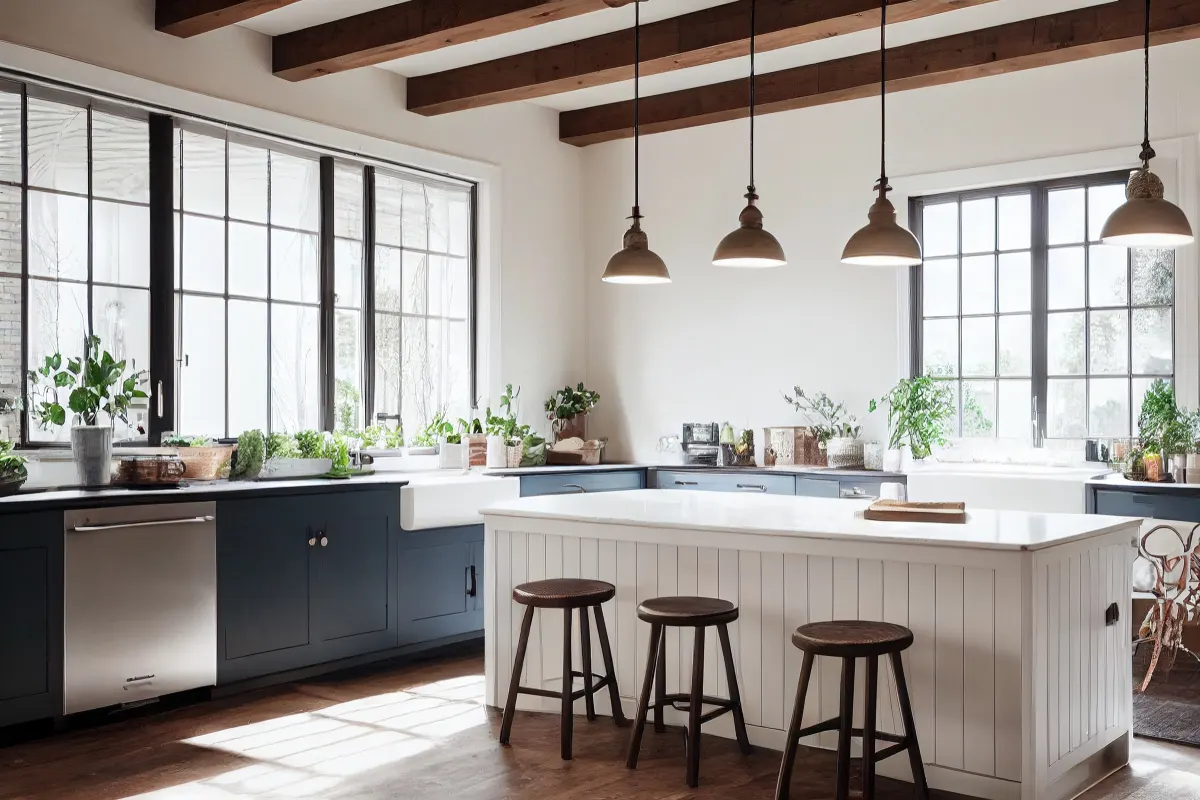
Run the taps and flush the toilet. Look under sinks for stains or warped wood. Check that bathrooms have working exhaust fans, and look at the caulking around tubs and showers.
Basement and mechanicals
Find the furnace, air conditioner and water heater, and photograph their labels if you're allowed: the manufacture date is often printed there. Look at the electrical panel and the foundation walls. A dehumidifier running hard, or boxes stored up on pallets, can be clues.
You're not doing the inspection; you're deciding whether the home deserves one. If it makes your shortlist, a professional home inspection comes later.
Questions to ask the host
| Question | Why it matters |
|---|---|
| Is there an offer date? | Tells you whether to expect competition |
| How long has it been listed? Has the price changed? | Shows how the seller's expectations have moved |
| What are the property taxes and utility costs? | Running costs vary a lot between similar homes |
| What updates have been done, and when? Were permits pulled? | Unpermitted work can be your problem later |
| Is there a pre-listing inspection? | You can read it, and have your own inspector review it |
| Are any items rented, like the water heater? | Rentals usually transfer to you with a monthly fee |
| What's included in the sale? | Appliances, fixtures and window coverings aren't automatic |
| For condos: the fee, what it covers, any special assessments? | The status certificate will confirm it later |
The host should answer factual questions. Opinions about value are for your own agent.
How to compare homes afterward
Rate each home the same day, against your needs and wants list, while it's fresh. Then compare the cost to live in each, not just the asking price. CMHC's list of homebuying costs is a good reminder of the items that add up beyond the mortgage.
Open house or private showing?
| Open house | Private showing | |
|---|---|---|
| Booking | None | Through your agent |
| Time in the home | Shared with other visitors | Just you and your agent |
| Who answers questions | The seller's agent | Your agent, who works for you |
| Best for | Screening homes and learning prices | Homes you're seriously considering |
Many buyers use open houses to screen, then book a private showing, often a second visit at a different time of day, for any home on the shortlist.
Etiquette and safety
- Follow the host's instructions on shoes and sign-in.
- Keep children close, and don't sit on beds or use the bathroom without asking.
- Don't open drawers or look through personal papers.
- Ask before taking photos or videos.
- Leave the home as you found it: doors closed, lights as they were.
After the open house
- Walk or drive the neighbourhood at a different time of day. See how to find your perfect neighbourhood.
- Ask your agent for sold prices of similar homes nearby.
- Book a private showing for any home on your shortlist.
- Get ready to offer if it's the one: confirm your pre-approval, line up an inspector, and read how to make an offer. If there's an offer date, bidding wars covers how to compete.
Find upcoming listings near you on homes for sale, or browse real estate agents if you'd like your own representation at the next one.
This article is general information, not legal advice.
Frequently asked questions
Do I need a real estate agent to go to an open house?
No. Open houses are open to the public, and you can visit without an agent. If you already have one, tell the host so they know you're represented. If you don't, remember the host represents the seller and can't advise you.
Should I sign in at an open house?
Hosts often ask visitors to register, partly for security. It's reasonable to give your name; you can decline extras like your budget or timeline. If you have an agent, write their name down so the listing agent knows who to contact.
Can I make an offer at an open house?
You can, but it's rarely wise on the spot. In Ontario, if you're not represented, the host's brokerage can only help you as a self-represented party after giving you a written disclosure, and their duty is to the seller. Leave, check comparable sales, and make your offer through your own agent.
Is it OK to open closets and cupboards?
Yes, within reason. Opening closets, cupboards and the electrical panel door is how you learn about storage and condition. Don't go through personal belongings, and ask before photographing anything.
How long should I spend at an open house?
Twenty minutes is usually enough for a first look at a typical house; budget longer for a home you're seriously considering. If it passes the first visit, a private showing gives you time to look again without other visitors.
Are virtual open houses worth it?
They're useful for screening layout and finishes, especially from out of town. They don't show smells, noise, drafts or the street, so view any home in person, ideally twice, before you offer.