Key takeaways
- City Council unanimously approved a ByWard Market revitalization framework on March 11, 2026: about $200 million, with the main construction proposed to start in 2028 and 2029.
- Most Market housing is condos and apartments; the older houses and rowhouses sit in the ByWard Market and Lowertown West heritage conservation districts, where exterior changes can need a heritage permit.
- Rideau station on O-Train Line 1 is a short walk, and groceries, the Rideau Centre, Major's Hill Park and the canal are all on foot.
- The trade-offs are real: weekend nightlife noise, visible social issues on some blocks, and limited, costly parking. Visit on a Friday night and a Tuesday morning before you commit.
- The Market turns 200 in 2027, the year the city has lined up anniversary events, a parking and mobility strategy and a heritage façade program.
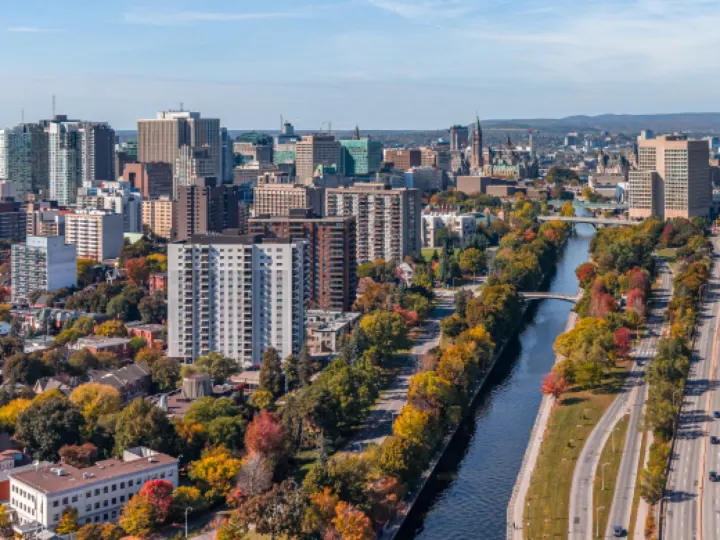
Living in the ByWard Market means living in Ottawa's oldest neighbourhood, steps from downtown, with almost everything on foot. Most homes are condos and apartments, with heritage houses and rowhouses on the quieter streets toward Lowertown. The trade-offs are noise, parking and the social issues the city is now spending heavily to address.
The Market grew up alongside Bytown in the 1820s and is one of Canada's oldest public markets. Today it is the city's busiest visitor district and also a residential neighbourhood where people live above the shops, in heritage rowhouses and in a growing number of condo buildings.
What living here is like
- Walkability: groceries, cafés, the seasonal market stalls and the Rideau Centre are on the doorstep. For the food scene specifically, see our guide to Ottawa neighbourhoods for food lovers.
- Transit: Rideau station on O-Train Line 1 is a short walk, putting downtown offices and the University of Ottawa minutes away. See Ottawa neighbourhoods near the O-Train for the wider network.
- Culture and green space: the National Gallery, Major's Hill Park, the Rideau Canal and the Ottawa River pathways are all close.
- Noise: bars and restaurants keep some blocks busy late, especially on weekends. Deliveries and garbage pickup start early.
- Safety and social issues: a concern raised by residents and businesses in recent years, and the focus of several city programs (below).
- Parking: limited and expensive. Plan around not needing a car, or confirm parking before you buy.

Housing in the Market
| Home type | Where you find it | What to check |
|---|---|---|
| Condo apartments | Older low-rises and newer towers across the district | Condo fees, the reserve fund, noise from the street, parking and locker |
| Heritage houses and rowhouses | Quieter residential streets toward Lowertown | Heritage permit rules, older wiring and plumbing, no driveway |
| Units above shops | Mixed-use buildings on the main streets | Commercial tenants below, late-night noise, insurance |
| Rental apartments | Throughout | Building management, sound insulation, laundry |
For condos, read the status certificate and the rules carefully, and see the condo lifestyle guide. For older houses, budget for a thorough inspection; our home inspections guide explains what to ask for.
Heritage rules buyers should know
Much of the Market and the streets just east of it are in two heritage conservation districts: the ByWard Market district, designated in 1991, and Lowertown West, designated in 1994. City Council adopted updated plans for both districts in October 2024. In practice, many changes to a building's exterior, such as windows, doors, additions or demolition, need a heritage permit, while interior work generally doesn't.
What homes cost here
The Market falls within the Ottawa–Vanier area, which also takes in Lowertown, Sandy Hill, Vanier, New Edinburgh and Overbrook. Compare it with the city as a whole in the live figures below.
Current market figures
Condo apartments dominate this part of the city, so compare the condo median, not the overall one, when you set a budget. Condo fees and parking can change the monthly picture a lot, so run the full cost:
A district in the middle of a makeover
The City of Ottawa has made the Market a revitalization priority, and the plan now has Council approval and a timeline.
| When | What the city has planned |
|---|---|
| March 2026 | Council unanimously approves the revitalization framework and redevelopment program (about $200 million) |
| 2026 | ByWard Square pilot, the Arts, Culture and Entertainment (ACE) District, Rideau station improvements, Rideau–Sussex underpass upgrades |
| 2027 | The Market's 200th anniversary, a mobility, access and parking strategy, wayfinding, a heritage façade improvement program, and a design update to Council in the fourth quarter |
| 2028 and later | Redevelopment of 70 Clarence Street, rehabilitation of 55 ByWard Market Square and the surrounding streetscapes, a York Street plaza, and a bid for National Historic Site designation |
What has already happened in 2026
- ByWard Square ran from July 9 to late September as a seasonal, open-air pilot with music, family activities and food and vendor pop-ups on ByWard Market Square and George Street. Results were mixed: the District Authority said weather and cancellations kept foot traffic below what was hoped, and feedback will shape what comes next.
- The ACE District launched in June with the Ottawa Art Gallery, including a large street mural on York Street and ByWard Market Square.
- Rideau station is getting better signage, more frequent cleaning, new art and improved cameras, with work continuing into 2027.
- ANCHOR, a non-police crisis response for mental health and substance use, now serves the Market and nearby neighbourhoods 24/7 for ages 16 and up through 2-1-1.
The ByWard Market District Authority, a municipal services corporation set up by the city, runs the ByWard and Parkdale public markets and programs the district's public spaces.
Who the Market suits
- People who want to walk everywhere and are happy without a car.
- Downtown workers, students and university staff, with Line 1 and uOttawa close.
- Downsizers trading a yard for culture and convenience, if they choose a quiet building.
- Less so for light sleepers, families who want a yard, and anyone who needs daily parking. Families weighing a central location should also read family-friendly Ottawa neighbourhoods.
Before you commit
- Visit at least twice: a Friday or Saturday night and a weekday morning.
- Check the unit's orientation. A unit facing a courtyard can be far quieter than one facing a bar street.
- Confirm parking and storage in writing.
- Ask about construction planned near the building, given the city's redevelopment program.
- Browse listings in the area on homes for sale in Ottawa–Vanier and compare with the Ottawa market page.
New to the city? Start with moving to Ottawa.
This article is general information, not legal or real estate advice. Plans and timelines reflect City of Ottawa information as of November 2026.
Frequently asked questions
Is the ByWard Market a good place to live?
It suits people who want to walk everywhere and like a lively street life: downtown offices, the university, groceries and Line 1 are all close. It suits light sleepers and people who need easy parking less well. Choose your block and your unit's orientation carefully, because a few streets make a big difference.
Is the ByWard Market safe?
Residents and businesses have raised concerns about street-level safety and social issues in recent years, and the city has responded with measures such as Rideau station improvements and ANCHOR, a 24/7 non-police crisis response for ages 16 and up reached by calling 2-1-1. Walk the area at different times yourself, and talk to people who live on the specific street.
What is the ByWard Market District Authority?
It is a municipal services corporation set up by the City of Ottawa to run the Market district. It replaced the area's business improvement area and the former Ottawa Markets corporation, and it manages the ByWard and Parkdale public markets along with programming in the district's public spaces.
Do I need a heritage permit to renovate in the ByWard Market?
Possibly. The ByWard Market and Lowertown West heritage conservation districts have plans the city adopted in October 2024, and many exterior alterations to buildings in those districts need a heritage permit. Interior work generally doesn't. Check with the city's heritage staff before you buy a house you plan to change.
When does the ByWard Market revitalization start?
Smaller projects started in 2026, including the ByWard Square pilot space and the Arts, Culture and Entertainment District. The larger pieces, including rehabilitating the 55 ByWard Market Square building and redeveloping 70 Clarence Street, are proposed for 2028 and later, with a design update due to Council in late 2027.
Where do people park if they live in the Market?
Many condo buildings sell or rent parking spaces separately, and some units come without one. Older houses often have no driveway. If you need a car, confirm what parking comes with the unit, what it costs, and whether on-street permits are available on that block before you make an offer.
Sources
- City of Ottawa — Revitalizing public space in the ByWard Market
- City of Ottawa — ByWard Square
- City of Ottawa — Lowertown West and ByWard Market Heritage Conservation Districts update
- ByWard Market District Authority
- CTV News Ottawa — ByWard Square closes after its first season
- CTV News Ottawa — 7 things to know about the plan to revitalize the ByWard Market
- Link2Build — Ottawa committee approves ByWard Market redevelopment plan (March 2026)