Key takeaways
- Ready means cash for the down payment and 1.5% to 4% in closing costs, with an emergency fund left over.
- Your housing costs should fit under 39% of gross income, and all debts under 44%, at the stress-test rate, not today's rate.
- Pull your Equifax and TransUnion reports three to six months before you apply. Insured mortgages need a score of at least 600, and better scores open more lenders.
- Plan to stay at least five years or so, so the costs of buying and selling don't outweigh what you build.
- Budget for maintenance every year: a common rule of thumb is 1% to 3% of the home's value.
You're ready to own a home when you have the down payment plus closing costs with an emergency fund left over, your housing costs fit comfortably at a rate 2 points higher than today's, your credit is clean, and you expect to stay put for at least five years or so. Prices and rates will move whatever you do. Your savings, your stability and your plans are what you control.
Answer these six questions honestly before you start booking showings. Each one links to a deeper guide when you need the detail.
A quick readiness checklist
| Question | Ready | Not yet |
|---|---|---|
| Cash | Down payment + closing costs + emergency fund | Only the down payment, or less |
| Income | Payment fits under 39% / 44% at the stress-test rate | Only works at today's rate |
| Credit | Both reports checked, no errors, score comfortably above 600 | Haven't looked, or recent missed payments |
| Debt | High-interest balances paid off | Carrying credit card debt month to month |
| Time | Likely to stay five years or more | Job, relationship or city could change soon |
| Upkeep | A maintenance budget and a plan | No buffer for the first big repair |
Three or more in the right-hand column? Fix those first. Most are a few months of work, not years.
1. Do you have a down payment, and the rest?
In Canada, the minimum down payment is 5% of the first $500,000 and 10% of the portion between $500,000 and $1.5 million. At $1.5 million and up, it's 20%.
| Purchase price | Minimum down payment |
|---|---|
| $450,000 | $22,500 |
| $700,000 | $45,000 |
| $1,200,000 | $95,000 |
With less than 20% down, you'll pay for mortgage default insurance. It's usually added to the mortgage, so it costs you over time, not up front.
Then add closing costs: land transfer tax, legal fees, a home inspection, title insurance and adjustments. CMHC's planning range is 1.5% to 4% of the purchase price, depending on your province and city. Every line is explained in what it really costs to buy a home.
If the down payment money is a gift from family, your lender will want a signed gift letter. Money borrowed from family counts as debt. Still building it? See how to save for a down payment.
2. Can your income carry the payment, at a higher rate?
Lenders look at two ratios:
- Gross debt service (GDS): housing costs (mortgage, property taxes, heating, and half of any condo fees) as a share of gross income.
- Total debt service (TDS): the same, plus all your other debt payments.
For insured mortgages, the limits are 39% GDS and 44% TDS, calculated at the qualifying rate: the higher of 5.25% or your contract rate plus 2 points (see the mortgage stress test, explained). If your budget only works at today's rate, it doesn't work yet.
Passing the lender's test is the floor, not the goal. How to work out your home buying budget shows how to find the number that fits your actual life.
3. Is the rest of your financial picture in order?
- Credit: pull your free credit reports from Equifax and TransUnion three to six months before you apply, and dispute any errors. Checking your own report doesn't hurt your score. For an insured mortgage, at least one borrower needs a score of 600 or more. See credit scores, explained.
- Other debt: a car loan can cut your borrowing power more than you'd expect, and credit card balances at 20% interest should go before a down payment grows.
- An emergency fund: aim to have savings left over after closing, so a surprise repair doesn't go on a credit card. Three months of essential expenses is a common starting point.
- Income history: lenders want income they can verify. If you're self-employed, on contract or paid largely by commission, read the self-employed mortgage guide.
4. How long will you stay?
Buying and selling both cost money: land transfer tax and legal fees on the way in, commission and legal fees on the way out, and possibly a mortgage penalty if you sell mid-term. Owning usually beats renting only if you stay long enough to cover those costs. Five years is a common rule of thumb, but it depends on prices, rents and rates.
If a job move, a growing family or a relationship change is likely in the next few years, renting a little longer may be the smarter call. Buying vs renting shows how to compare the two honestly.
5. Are you ready to be the landlord?
When the furnace fails or the roof leaks, it's your bill. Budget for maintenance every year: a common rule of thumb is 1% to 3% of the home's value, more for older homes. On a $450,000 home, that's $4,500 to $13,500 a year. Condo owners pay much of this through fees, plus any special assessment.
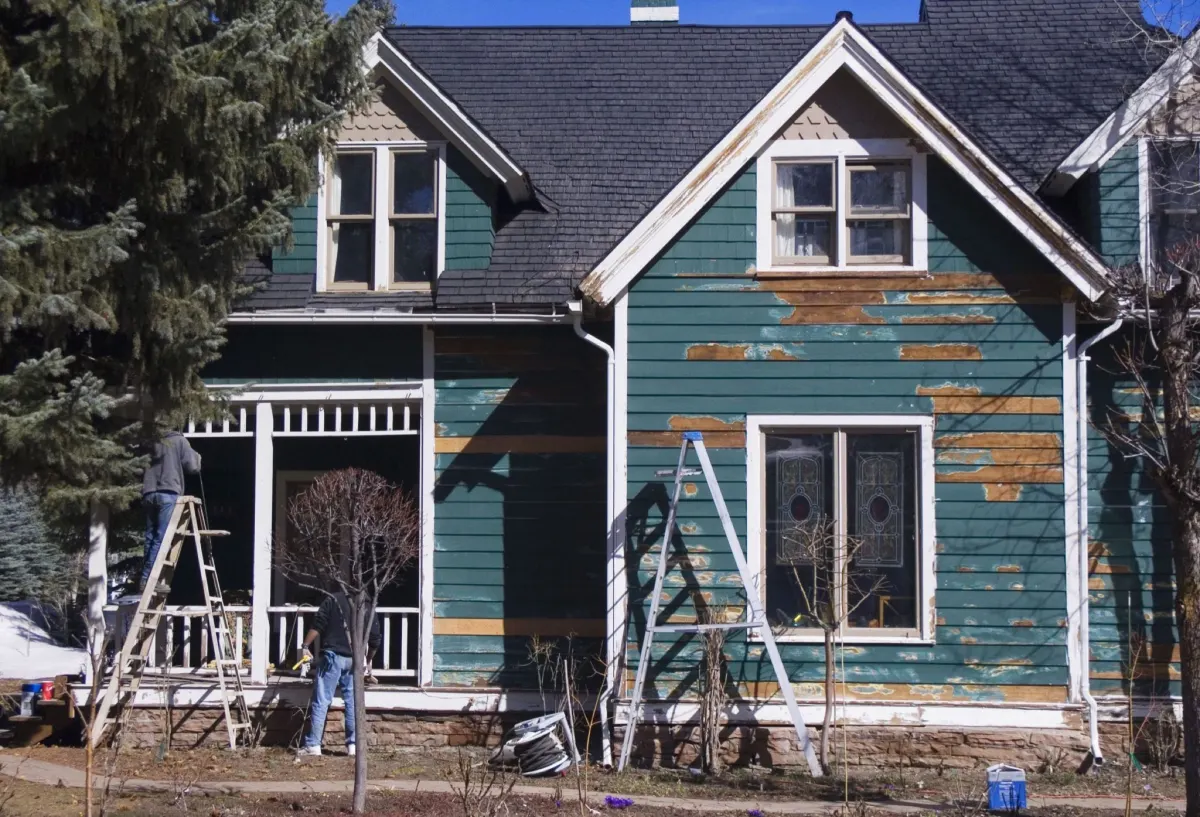
Know your basics before you move in: where the main water shut-off is, how to reset a breaker, when to clean the eavestroughs and change the furnace filter. You don't have to be handy, but you need a plan, and ideally a few trusted local pros. Our seasonal home maintenance guide has the yearly checklist.
6. Do you know where you want to live?
The house matters, but the neighbourhood is the part you can't renovate. Before you shop, decide what matters most: commute time, transit, schools, parks, walkability and noise. Then compare neighbourhoods on those things, not on price alone. Two homes at the same price in different areas can be very different places to live. How to find your perfect neighbourhood walks through it, and our neighbourhood guides cover areas in detail.
Visit your short-listed areas at different times: a weekday rush hour, a Saturday night, and in winter if you can. Walk to the nearest grocery store and transit stop. A neighbourhood that looks perfect on a sunny Sunday open house can feel different at 8 a.m. on a Tuesday in February.
Before you start: use the programs
First-time buyers have real help: the FHSA, the RRSP Home Buyers' Plan, a federal tax credit and land transfer tax refunds. Open an FHSA early, because contribution room only starts building once the account is open. Details and eligibility are in government help for first-time buyers.
Not ready yet? A 12-month plan
| When | Do this |
|---|---|
| Month 1 | Open an FHSA (even with a small deposit) and pull both credit reports |
| Months 1–3 | Track every dollar you spend; set an automatic transfer to savings on payday |
| Months 3–6 | Pay off credit card balances and any small loans; dispute report errors |
| Months 6–9 | Build the emergency fund alongside the down payment; visit neighbourhoods |
| Months 9–12 | Re-run the checklist above; talk to a mortgage broker about pre-approval |
A year of steady work fixes most of the "not yet" answers, and you'll shop with a clear budget instead of a hopeful one. How to save for a down payment has the savings plan in detail.
Ready? Your next three steps
- Get pre-approved, so you know your real budget and can hold a rate. Start on our pre-approval page.
- Short-list two or three neighbourhoods, using what matters to you.
- Build your team: a real estate agent, a mortgage broker, a home inspector and a real estate lawyer. Then follow the steps to buying a home.
This article is general information, not financial advice.
Frequently asked questions
What credit score do I need to buy a house in Canada?
For a mortgage insured by CMHC, at least one borrower needs a score of 600 or more. Many lenders look for higher scores for their best rates, and below the bank thresholds you may need an alternative lender at a higher rate. See our guide to credit scores for how to improve yours.
How much should I have saved before buying a house?
Enough for the down payment, closing costs and an emergency fund. On a $450,000 home in Ontario, that's the $22,500 minimum down payment, roughly $6,000 in closing costs for a first-time buyer, and ideally three months or more of expenses left over.
Can I buy a house with student loans or a car loan?
Yes, as long as your total debt payments, including the new mortgage at the stress-test rate, stay under the lender's TDS limit, 44% for insured mortgages. Every $100 of monthly debt payments reduces how much you can borrow, so paying off a small loan first can help.
How long should I be at my job before buying a house?
There's no single rule, but lenders want income they can verify and expect to continue. Salaried employees past probation are usually straightforward. If you're self-employed, on contract or newly commissioned, expect to need a longer history, often two years of tax returns.
Is it a bad idea to buy a house if I might move in three years?
It's often expensive. Land transfer tax, legal fees, mortgage penalties and selling costs can easily total several per cent of the price, and three years of mortgage payments may not build enough equity to cover them. Renting, or buying something easy to rent out, can be safer.
Should I wait for prices or rates to drop?
Nobody can reliably time either. Readiness depends on what you control: savings, income stability, debts and how long you'll stay. If those are in place and the payment works at a higher rate, the timing of the market matters less.
Sources
- CMHC — Government of Canada programs to support homebuyers
- CMHC — Quick reference (GDS/TDS limits, qualifying rate, minimum credit score)
- CMHC — General requirements for homeowner mortgage loan insurance
- CMHC — Mortgage loan insurance premiums
- FCAC — Buying a home
- FCAC — Ordering your credit report and credit score
- Ontario — Land transfer tax refunds for first-time homebuyers