What counts as commercial
- Multi-unit residential buildings with five or more units.
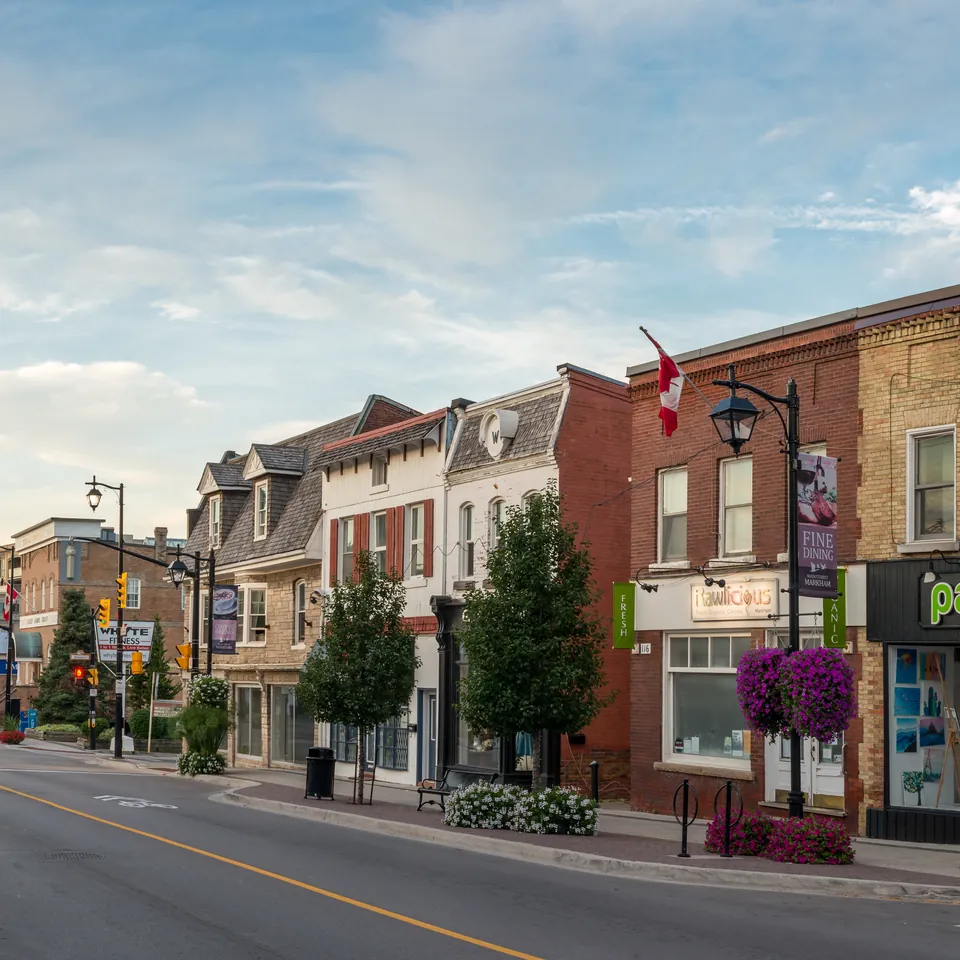
- Retail, office and mixed-use buildings.
- Industrial buildings and warehouses.
- Land and construction financing.
- Owner-occupied business premises.
The two numbers that decide it
Loan-to-value is the mortgage divided by the appraised value. Conventional commercial lenders stop at about 75% for strong properties and lower for specialised ones.
The debt service coverage ratio is the property's net operating income divided by its annual mortgage payments. A ratio of 1.25 means the property earns 25% more than the mortgage costs. If the ratio is too low, the loan is reduced until it fits.
CMHC-insured rental financing
For rental buildings with five or more units, CMHC's MLI Select program rewards affordability, energy efficiency and accessibility with loan-to-value of up to 95% and amortizations of up to 50 years, at rates close to government bond yields. Premiums and underwriting take longer than a conventional loan.
What a lender will ask for
- Rent roll and copies of leases.
- Two to three years of operating statements for the property.
- A commercial appraisal.
- A Phase I environmental site assessment.
- A building condition report for older properties.
- Financial statements and net worth for the borrower and guarantors.
How it differs from a home mortgage
| Residential | Commercial | |
|---|---|---|
| Approved on | Your income and credit | The property's income, then yours |
| Down payment | From 5% | Usually 25% to 35% |
| Amortization | 25 to 30 years | 15 to 25 years (longer if CMHC-insured) |
| Fees | Minimal | Lender, appraisal, environmental and legal fees |
| Prepayment | 10% to 20% a year | Often closed, with yield maintenance |